

New Solar Device Turns Carbon Dioxide Into Liquid Fuel
Scientists have developed a groundbreaking new solar device capable of converting carbon dioxide (CO₂) and water directly into methanol, a valuable liquid fuel. Inspired by the natural process of photosynthesis, the technology uses sunlight as its only energy source, creating a promising pathway for producing cleaner fuels while reducing greenhouse gas emissions.
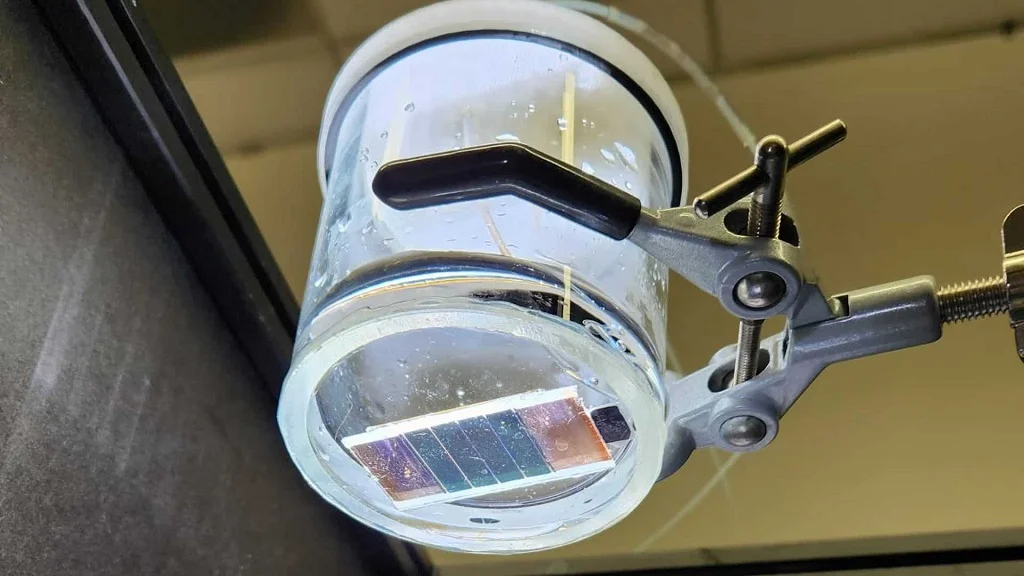
The breakthrough comes from a team of researchers who combined advanced catalysts with innovative solar materials to create what is often described as an artificial leaf. Unlike traditional solar technologies that generate electricity, this system directly produces a usable liquid fuel. The development could help address two major global challenges at the same time: reducing carbon emissions and creating sustainable energy sources for the future.
Why This Discovery Matters?
As countries work to reduce carbon emissions and transition toward cleaner energy sources, one major challenge remains: how to store renewable energy efficiently while reducing atmospheric carbon dioxide. Solar panels and wind turbines can generate large amounts of clean electricity, but storing that energy for later use remains expensive and technically challenging in many situations.
At the same time, industries such as shipping, aviation, manufacturing, and heavy transportation continue to rely heavily on liquid fuels because batteries are often impractical for long-distance or high-energy applications. This creates a growing demand for renewable fuels that can be produced sustainably without increasing carbon emissions.
The new artificial photosynthesis device addresses both issues simultaneously. Instead of treating carbon dioxide solely as a waste product, it transforms the gas into a valuable fuel. If successfully scaled, this approach could also help create a circular carbon economy where emissions become raw materials for future energy production.
Benefits of Liquid Fuels
- Easy transportation and storage
- Compatibility with existing fuel infrastructure
- High energy density
- Use in industries where batteries are not practical
Understanding Artificial Photosynthesis
Artificial photosynthesis has been a major focus of clean-energy research for decades. Scientists have long sought ways to mimic nature’s ability to capture sunlight and convert simple ingredients into energy-rich compounds. While natural plants produce sugars for growth, artificial systems aim to create fuels that can power vehicles, ships, factories, and power plants.
The concept is particularly attractive because it combines renewable energy generation with carbon recycling. Instead of extracting fossil fuels from the ground, future energy systems could potentially produce fuels directly from sunlight, water, and carbon dioxide already present in the environment.
Recent advances in materials science, nanotechnology, and catalyst development have made artificial photosynthesis more efficient than ever before. The new methanol-producing device represents one of the most promising examples of how the technology is moving from laboratory experiments toward practical applications.
How Natural Photosynthesis Works
Plants absorb:
- Sunlight
- Water
- Carbon dioxide
They then convert these ingredients into sugars that store energy.
How Artificial Photosynthesis Works
Artificial photosynthesis follows a similar principle but produces fuels instead of plant sugars.
The system captures solar energy and uses it to trigger chemical reactions that transform carbon dioxide and water into valuable products such as:
- Hydrogen
- Carbon monoxide
- Ethanol
- Methanol
What Is Methanol?
Methanol is one of the most important industrial chemicals in the world. Although many people are unfamiliar with it, methanol is used in the production of thousands of everyday products, including plastics, paints, synthetic fabrics, adhesives, and construction materials.
Interest in methanol has increased significantly in recent years because it can also serve as a cleaner-burning fuel. Many shipping companies and energy producers are exploring methanol as an alternative to traditional fossil fuels due to its lower emissions profile and easier handling compared to some other alternative fuels.
Another advantage is that global infrastructure for storing and transporting methanol already exists. This means future renewable methanol production systems could also potentially integrate into existing fuel supply chains without requiring entirely new distribution networks.
Common Uses of Methanol
| Application | Purpose |
|---|---|
| Chemical manufacturing | Production of plastics, paints, and adhesives |
| Transportation fuel | Alternative fuel source |
| Shipping industry | Cleaner-burning marine fuel |
| Energy storage | Renewable energy carrier |
| Industrial processes | Solvents and feedstocks |
How the New Solar Device Works?
Unlike traditional renewable energy systems that generate electricity, this artificial leaf directly produces a usable fuel. The device integrates solar energy collection and chemical conversion into a single platform, eliminating the need for external electrical power sources.
The technology relies on carefully engineered materials that absorb sunlight and direct that energy toward carbon dioxide conversion reactions. Researchers spent several years refining both the catalyst and the solar-absorbing components to maximize efficiency and fuel output.
One of the most impressive aspects of the system is its ability to operate independently. Once exposed to sunlight, the solar device performs the complete conversion process using only carbon dioxide and water as inputs, demonstrating the potential for future self-sustaining solar fuel production.
Step 1: Capturing Sunlight
The system contains specially designed silicon photoelectrodes that absorb sunlight.
Unlike traditional solar panels that generate electricity for external use, these components directly power chemical reactions inside the solar device.
Step 2: Separating Electrical Charges
When sunlight strikes the silicon structure, it creates electrical charges.
Researchers engineered microscopic silicon pillars coated with fullerene carbon materials to improve charge separation, electron movement, reaction efficiency, and surface area.
Step 3: Converting Carbon Dioxide
The solar device uses a specialized catalyst made from cobalt phthalocyanine molecules attached to carbon nanotubes.
These nanotubes serve as ultra-fast pathways for electrons, enabling efficient conversion of carbon dioxide into methanol.
Step 4: Producing Liquid Fuel
The final result is methanol, a liquid fuel that can be stored, transported, and potentially used in existing industrial systems.
The entire process operates without any external power source beyond sunlight.
The Technology Behind the Breakthrough
Creating methanol from carbon dioxide is far more complicated than producing simpler chemicals. The process requires multiple electron transfers and carefully controlled reactions. Small inefficiencies can dramatically reduce performance, making catalyst design one of the most important aspects of the technology.
The research team combined several years of innovations into a single integrated system. By improving both the catalyst and the photoelectrode, they achieved significantly better performance than many earlier artificial photosynthesis designs.
Their success also demonstrates how advances in nanomaterials, molecular chemistry, and solar engineering can work together to create more effective renewable fuel technologies. These improvements could influence future research across the broader clean-energy sector.
Advanced Molecular Catalyst
One of the biggest challenges in carbon dioxide conversion is controlling complex chemical reactions.
The new catalyst can efficiently perform a six-electron reaction, allowing direct methanol production rather than simpler products such as carbon monoxide.
Carbon Nanotube Electron Networks
Carbon nanotubes help transfer electrons rapidly, reduce energy losses, and improve overall fuel production efficiency.
Enhanced Photoelectrode Design
The redesigned photoelectrode improves sunlight absorption, reaction surface area, and electron transfer rates.
How This New Solar Device Differs From Traditional Solar Panels
When most people think about solar energy, they imagine rooftop solar panels generating electricity for homes and businesses. While solar panels have become one of the most successful renewable energy technologies in the world, they solve only part of the energy challenge.
Artificial photosynthesis offers something different. Instead of producing electricity that must be stored in batteries, it converts sunlight directly into a liquid fuel that can be stored, transported, and used when needed.
This capability could make renewable energy more practical for industries that require large amounts of stored energy.
| Traditional Solar Panels | Artificial Leaf Technology |
| Produces electricity | Produces liquid fuel |
| Requires batteries for storage | Fuel stores energy directly |
| Powers electrical devices | Powers industrial and transportation applications |
| Energy may be lost during storage | Fuel can be stored for long periods |
| Grid-dependent in many cases | Creates portable energy products |
Potential Environmental Benefits
The environmental significance of this breakthrough extends beyond creating a new fuel source. One of its greatest strengths is the ability to turn carbon dioxide into a useful resource.
If paired with carbon capture technologies, future systems could collect CO₂ from industrial facilities or even directly from the atmosphere and convert it into methanol.
This approach supports global efforts to reduce emissions while creating economic value from carbon that would otherwise contribute to climate change.
Carbon Recycling
Instead of releasing carbon dioxide into the atmosphere, the system uses it as a raw material.
Reduced Fossil Fuel Dependence
Producing fuel from sunlight and captured CO₂ could reduce reliance on oil, coal, and natural gas.
Cleaner Industrial Processes
Industries requiring liquid fuels may eventually have access to lower-emission alternatives.
Support for Renewable Energy Systems
Renewable energy could be stored in chemical form for later use.
Challenges Before Commercial Use
Although the technology is impressive, moving from laboratory success to commercial deployment is rarely simple.
Researchers must ensure the system remains efficient under real-world conditions and can operate reliably for years. Production costs must also become competitive with existing fuel technologies.
In addition, large-scale carbon capture systems and supporting infrastructure will be required before solar fuel production can reach commercial levels.
Scaling Up Production
Large-scale systems must maintain efficiency while processing much greater volumes of carbon dioxide.
Long-Term Durability
Scientists continue working to improve material stability, catalyst lifespan, and maintenance requirements.
Production Costs
Commercial success depends on making the technology affordable and scalable.
Carbon Dioxide Supply
Reliable carbon capture systems will be needed to provide the necessary CO₂.
Industries That Could Benefit
The ability to create renewable liquid fuel directly from sunlight and carbon dioxide has applications across multiple sectors of the economy.
Some industries have struggled to find practical alternatives to fossil fuels because they require energy-dense fuels for long-distance operations. Renewable methanol could help address this challenge.
Because methanol is already widely traded around the world, many industries could potentially adopt renewable methanol without completely rebuilding their infrastructure.
Shipping
The shipping industry is actively exploring methanol as a cleaner fuel option.
Chemical Manufacturing
Methanol serves as a key building block for numerous industrial products.
Energy Storage
Renewable energy can be stored as liquid fuel for later use.
Heavy Transportation
Long-distance transportation sectors may benefit from fuels that are easier to store and transport than batteries.
Remote Locations
Areas with abundant sunlight could potentially generate fuel locally.
The Future of Solar Fuel Technology
The artificial leaf represents an important milestone, but researchers see it as only the beginning. Future versions may achieve higher efficiency, lower costs, and greater durability.
Scientists are exploring new catalysts, advanced materials, and improved system designs that could dramatically increase fuel production rates.
As renewable energy technologies continue to evolve, solar fuel production may become an important complement to solar panels, wind power, hydrogen, and also battery storage.
Areas of Future Research
- Increasing conversion efficiency
- Improving catalyst performance
- Extending solar device lifespan
- Reducing manufacturing costs
- Scaling production systems
- Integrating carbon capture technologies
Frequently Asked Questions
What fuel does the new solar device produce?
The solar device produces methanol, a liquid alcohol used as both an industrial chemical and an alternative fuel.
Does the system require external electricity?
No. The device operates entirely using sunlight.
Why is methanol important?
Methanol is easy to store, transport, and integrate into existing industrial infrastructure.
What is artificial photosynthesis?
Artificial photosynthesis mimics the natural process plants use to convert sunlight, water, and carbon dioxide into energy-rich compounds.
Could this technology help fight climate change?
Potentially yes. By recycling carbon dioxide into useful fuels, it could also reduce emissions and dependence on fossil fuels.
Is the technology commercially available?
No. It remains in the research and development stage.
Conclusion (New Solar Device)
The development of a new solar device that converts carbon dioxide into methanol marks an exciting advancement in clean-energy research. By combining artificial photosynthesis, advanced catalysts, and innovative solar materials, researchers have demonstrated a new way to transform sunlight, water, and carbon dioxide into a valuable liquid fuel.
What makes this breakthrough particularly significant is its ability to address two major global challenges at the same time: reducing carbon emissions and producing sustainable energy. Instead of treating carbon dioxide solely as a pollutant, the technology turns it into a useful resource that can support future energy systems.
While important challenges remain before commercial deployment becomes possible, the research provides a strong foundation for future innovation. As scientists continue improving efficiency, durability, and scalability, artificial photosynthesis may emerge as a key technology in the global transition toward cleaner and more sustainable energy solutions.
Sources
This article is based on information published by Yale University and research findings published in the Journal of the American Chemical Society (JACS).
- Yale University News: Growing a New ‘Leaf’ That Harnesses Sun, Water and CO₂ to Make Liquid Fuel
- Journal of the American Chemical Society (JACS): A Monolithic Artificial Leaf for Solar Methanol Production from CO₂ and H₂O
Also read: How to trim your Fuel Expenses: Here are Top 10 Tips.