JEC Tower: World’s New Tallest Building in Saudi Arabia
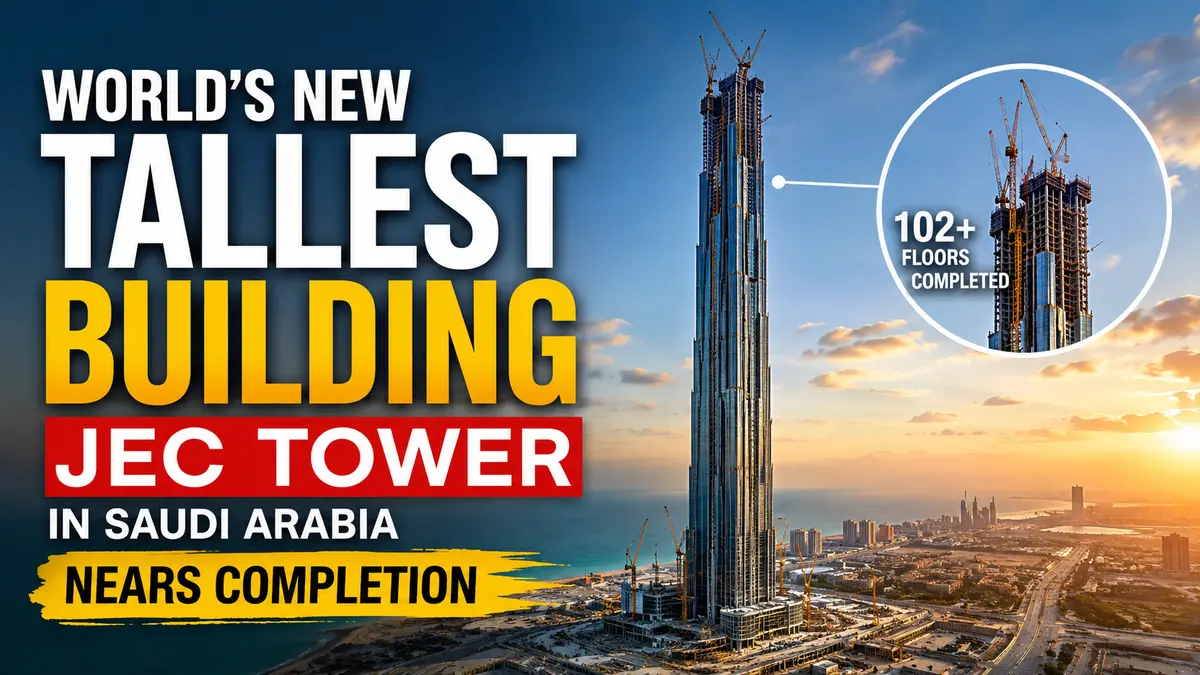
Saudi Arabia’s World’s new tallest building JEC Tower races toward completion in Saudi Arabia as the ambitious JEC Tower passes the 100-floor milestone and moves steadily toward becoming the first skyscraper to exceed one kilometer in height. The project is now progressing rapidly after years of delays, with completion currently targeted for 2028, making it one of the world’s most significant engineering achievements.
For years, the race to build the world’s tallest skyscraper appeared uncertain after construction on the project stalled for an extended period. Today, however, the story has changed dramatically. Construction crews are once again making visible progress, and the tower is climbing higher almost every month.
The project, officially known as JEC Tower (Jeddah Economic Company Tower) and previously referred to as Jeddah Tower and Kingdom Tower, is once again capturing worldwide attention. Once completed, it will permanently take the title of the world’s tallest building from Dubai’s Burj Khalifa and become the first structure in history to rise beyond the symbolic one-kilometer mark.
A Major Construction Milestone Has Been Reached
The latest construction update marks one of the biggest moments in the project’s history.
According to recent reports, JEC Tower has now reached 102 completed floors, making it one of only a small number of skyscrapers worldwide ever to exceed the 100-floor mark. This milestone reflects the remarkable pace of construction since work resumed after years of interruption.
Only a few months earlier, the tower stood at around 69 floors before construction accelerated significantly. Engineers and project managers have steadily increased the building’s vertical progress, bringing the historic project much closer to its final height.
For architecture enthusiasts and skyscraper followers, crossing the 100-floor threshold is much more than a symbolic achievement. At these heights, every additional floor presents increasingly complex engineering challenges involving wind forces, structural stability, concrete pumping, elevator systems, and construction logistics.
What Is JEC Tower?
Developers are building JEC Tower, a supertall mixed-use skyscraper, in Jeddah, Saudi Arabia, along the Red Sea coast. The tower serves as the centerpiece of the larger Jeddah Economic City development, a master-planned urban district that aims to transform the area into a global destination for business, tourism, luxury living, and investment.
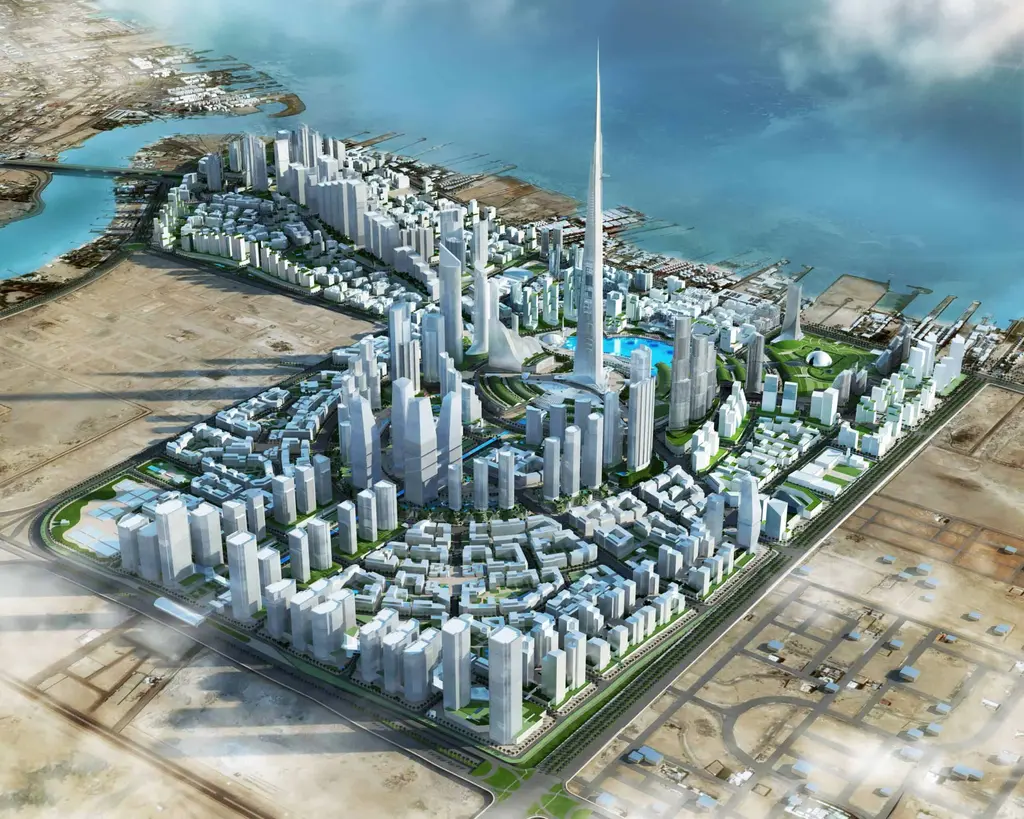
The tower is designed by the internationally renowned architectural firm Adrian Smith + Gordon Gill Architecture (AS+GG). Adrian Smith is also famous for designing the Burj Khalifa, meaning he is responsible for both the current and future tallest buildings on Earth.
Rather than simply breaking a height record, the project aims to create an iconic landmark that represents Saudi Arabia’s growing ambitions in architecture, engineering, tourism, and economic diversification.
JEC Tower at a Glance
| Feature | Details |
|---|---|
| Location | Jeddah, Saudi Arabia |
| Project Name | JEC Tower (Jeddah Economic Company Tower) |
| Former Names | Jeddah Tower, Kingdom Tower |
| Architect | Adrian Smith + Gordon Gill Architecture |
| Planned Height | More than 1 kilometer (1,000+ meters) |
| Planned Floors | At least 157 |
| Current Progress | 102 floors completed |
| Expected Completion | 2028 |
| Main Uses | Hotel, residences, offices, observation deck |
| Elevators | 59 |
| Total Floor Area | Approximately 5.7 million square feet |
Also read: Top 5 Tallest Buildings in Saudi Arabia: New List 2026
Why This Project Is Making Global Headlines?
Skyscrapers have always represented more than just impressive heights. They demonstrate technological capability, economic confidence, and national ambition.
JEC Tower is receiving worldwide attention because it is expected to achieve several historic firsts simultaneously.
Among its most significant milestones are:
- The first building to exceed one kilometer in height.
- The future tallest building in the world.
- One of the largest reinforced-concrete skyscrapers ever constructed.
- Home to what is expected to become the world’s highest observation deck.
- The centerpiece of one of Saudi Arabia’s largest urban developments.
These achievements explain why every major construction update attracts global media coverage.
How Tall Will the Tower Be?
Although the project’s exact final architectural height has not been officially disclosed, developers have consistently confirmed that it will rise well beyond 1,000 meters (0.62 miles).
That means the tower will comfortably surpass the current record holder, the Burj Khalifa, which stands at 828 meters (2,717 feet).
To appreciate the scale, consider these comparisons:
| Landmark | Height |
|---|---|
| Eiffel Tower | 330 m |
| Empire State Building | 443 m |
| One World Trade Center | 541 m |
| Burj Khalifa | 828 m |
| JEC Tower | More than 1,000 m (planned) |
From its highest observation areas, visitors are expected to enjoy views stretching well over 100 kilometers across Jeddah and the Red Sea under favorable weather conditions.
Why Building Beyond One Kilometer Is So Difficult?
Constructing a skyscraper that exceeds one kilometer requires engineering solutions far beyond those used in conventional high-rise buildings.
As a structure becomes taller, it must withstand stronger wind loads, greater structural movement, enormous gravitational forces, and increasingly difficult construction logistics.
Some of the biggest engineering challenges include:
- Pumping concrete hundreds of meters into the air.
- Maintaining structural stability during high winds.
- Designing elevator systems capable of serving extreme heights efficiently.
- Managing thermal expansion caused by intense desert temperatures.
- Ensuring occupant comfort by minimizing building sway.
Engineers involved in the project have adopted a concrete-based structural system that relies on interconnected walls rather than traditional columns and outriggers. This design helps distribute both gravity and wind loads more efficiently while simplifying construction. The tower also rests on a massive 5-meter-thick raft foundation supported by 270 bored piles extending as deep as 105 meters below ground.
More Than a Skyscraper
Although headlines focus on the tower’s height, JEC Tower is intended to function as a complete vertical city.
Once completed, it will include:
- Luxury residences
- Premium office space
- A five-star hotel
- Retail and hospitality facilities
- High-end restaurants
- Conference facilities
- Public viewing areas
- The world’s highest observation deck
This mixed-use approach ensures the building remains active throughout the day while attracting residents, tourists, businesses, and international visitors.
Instead of standing alone, the tower will anchor the much larger Jeddah Economic City development, creating an entirely new urban district around it.
From Years of Delays to Rapid Progress
The journey to becoming the world’s tallest building has not been straightforward.
Construction originally began with enormous expectations, but financial challenges and other project-related issues led to a lengthy pause that left many wondering whether the tower would ever be completed.
Today, those doubts are fading.
Recent construction updates show steady progress, renewed investment, and strong momentum toward the current 2028 completion target. Unlike some other ambitious Saudi megaprojects that have reportedly been scaled back or revised, JEC Tower is continuing to rise and remains one of the country’s flagship developments.
Engineering Behind the World’s Tallest Building JEC Tower
Constructing a building that rises beyond one kilometer requires engineering solutions that go far beyond those used in conventional skyscrapers. Every additional floor increases structural loads, wind pressure, and construction complexity, making JEC Tower one of the most technically demanding projects ever attempted.
To overcome these challenges, engineers have combined advanced structural design, high-strength materials, and sophisticated construction techniques. The result is a tower designed to remain stable, efficient, and safe despite its unprecedented height.
A Shape Designed to Defeat the Wind
One of the greatest threats to any supertall building is wind. At extreme heights, powerful gusts can create vibrations that affect both the structure and the comfort of occupants.
Rather than using a simple rectangular design, JEC Tower features a sleek, tapering form inspired by the leaves of desert plants. As the tower rises, its floor plates gradually reduce in size, disrupting wind patterns and minimizing the formation of strong vortices around the structure.
This aerodynamic design helps:
- Reduce wind pressure on the building.
- Limit structural movement at higher elevations.
- Improve occupant comfort by reducing sway.
- Increase long-term structural efficiency.
The tower’s three-winged layout also distributes forces more evenly, making it one of the most advanced skyscraper designs ever developed.
Massive Foundations for a Massive Structure
A one-kilometer-tall tower requires an equally impressive foundation.
JEC Tower stands on a reinforced concrete raft approximately 5 meters thick, supported by around 270 deep foundation piles extending roughly 105 meters into the ground. These piles transfer the enormous weight of the building to stronger underground layers, helping ensure long-term stability despite the challenging soil conditions near the Red Sea.
The foundation alone represents years of planning, testing, and engineering analysis.
High-Speed Elevators and Smart Building Systems
Moving thousands of people through more than 150 floors presents another major challenge.
When completed, the tower is expected to feature approximately 59 elevators, including ultra-high-speed lifts capable of transporting passengers efficiently between different sections of the building.
Other advanced systems include:
- Intelligent building management technology.
- Energy-efficient climate control.
- Water-saving infrastructure.
- Modern fire safety and emergency evacuation systems.
- Advanced security and access controls.
These technologies are designed to create a comfortable experience while improving operational efficiency.
What Will Be Inside JEC Tower?
Although its height attracts the most attention, JEC Tower is designed as a fully integrated mixed-use development rather than simply an observation tower.
Visitors, residents, business professionals, and tourists will all use different sections of the building.
Luxury Residences
Upper floors will accommodate premium residential apartments offering panoramic views across Jeddah and the Red Sea.
Residents are expected to enjoy exclusive amenities such as:
- Private lounges
- Fitness centers
- Swimming pools
- Concierge services
- Premium security
Office Space
The tower will also provide Grade-A office space aimed at multinational corporations, regional headquarters, financial institutions, and technology companies.
Its iconic status alone is expected to make it one of the most prestigious business addresses in the Middle East.
Luxury Hotel
A five-star luxury hotel will occupy part of the tower, welcoming international visitors, business travelers, and tourists seeking a unique hospitality experience.
Guests can expect:
- Premium suites
- Fine dining restaurants
- Conference facilities
- Wellness centers
- Spectacular skyline views
Observation Deck
Perhaps the building’s biggest attraction will be its observation deck.
Expected to become the highest observation deck in the world, it will provide visitors with breathtaking views stretching across Jeddah, the Red Sea coastline, and surrounding landscapes on clear days.
JEC Tower vs Burj Khalifa
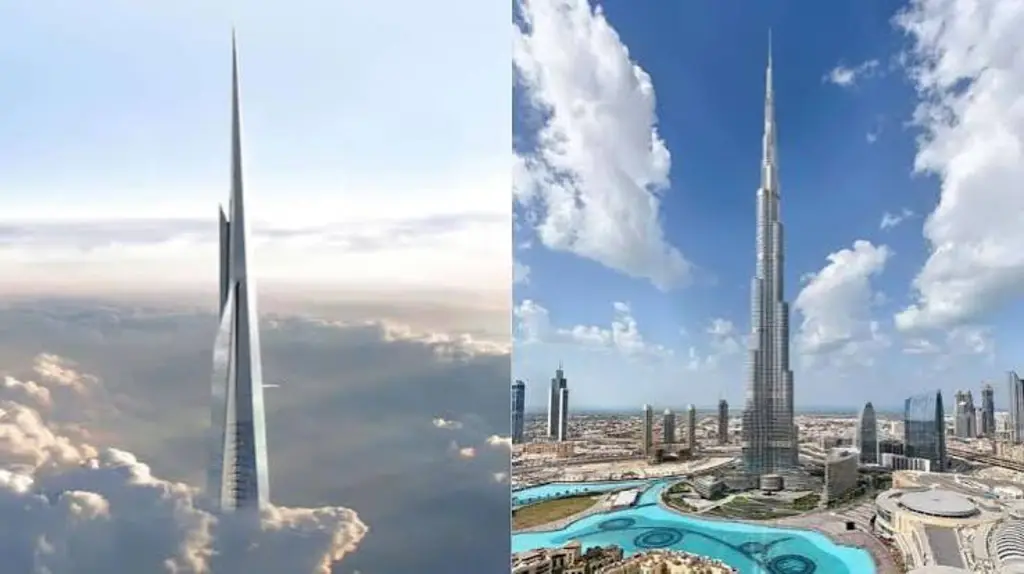
As JEC Tower approaches completion, comparisons with Burj Khalifa have become increasingly common.
| Feature | JEC Tower | Burj Khalifa |
|---|---|---|
| Country | Saudi Arabia | United Arab Emirates |
| City | Jeddah | Dubai |
| Planned Height | Over 1,000 m | 828 m |
| Floors | 157+ | 163 |
| Architect | Adrian Smith + Gordon Gill | Adrian Smith (SOM) |
| Completion Target | 2028 | Completed in 2010 |
| Observation Deck | Planned world’s highest | World’s highest currently in operation |
Although Burj Khalifa will likely retain more occupied floors, JEC Tower will surpass it in overall architectural height by a considerable margin.
Interestingly, architect Adrian Smith played a leading role in designing both skyscrapers, making this project a remarkable continuation of his work in pushing the limits of modern architecture.
Why JEC Tower Matters for Saudi Vision 2030
JEC Tower is much more than an engineering achievement—it is also a symbol of Saudi Arabia’s broader economic transformation.
The project aligns closely with Saudi Vision 2030, the national strategy aimed at diversifying the country’s economy beyond oil.
By creating iconic landmarks and attracting international investment, Saudi Arabia hopes to strengthen sectors such as:
- Tourism
- Real estate
- International business
- Hospitality
- Technology
- Entertainment
JEC Tower is expected to become one of the country’s most recognizable landmarks, alongside other major developments including NEOM, Diriyah Gate, Qiddiya, and the Red Sea tourism projects.
Its completion would reinforce Saudi Arabia’s position as one of the world’s most ambitious construction markets.
Economic Impact of the Project
Large-scale skyscrapers often generate benefits that extend well beyond their own walls.
JEC Tower is expected to contribute to the regional economy through:
Job Creation
Thousands of workers are involved during construction, while thousands more are expected to find long-term employment in operations, hospitality, maintenance, retail, and property management.
Tourism Growth
The tower is likely to become one of Saudi Arabia’s most visited attractions, drawing millions of domestic and international visitors each year.
Foreign Investment
Iconic developments often encourage additional investment in surrounding commercial and residential projects.
Urban Development
As the centerpiece of Jeddah Economic City, the tower is expected to accelerate infrastructure improvements and support the development of new neighborhoods, transport links, and commercial districts.
What Happens Next?
Although reaching 102 floors marks a major achievement, significant work remains before the tower opens to the public.
Upcoming phases include:
- Completing the remaining structural floors.
- Installing the exterior façade.
- Mechanical, electrical, and plumbing systems.
- Elevator installation and testing.
- Interior fit-outs.
- Safety inspections.
- Commissioning and operational testing.
Each stage requires careful coordination among engineers, contractors, and specialist teams.
If construction continues at its current pace, the tower is expected to move steadily toward its planned completion in 2028.
The exact opening date will depend on construction progress, testing, and regulatory approvals.
Why the World Is Watching?
Few construction projects generate as much global attention as JEC Tower.
Its significance extends beyond breaking a height record. It represents advances in structural engineering, architecture, urban planning, and national development.
For engineers, it demonstrates what modern construction technology can achieve.
For architects, it redefines the possibilities of skyscraper design.
And for Saudi Arabia, it symbolizes long-term investment in infrastructure, tourism, and economic diversification.
As the tower continues rising toward the one-kilometer milestone, it is increasingly becoming one of the defining construction stories of the decade.
Frequently Asked Questions
1. What is the current construction status of JEC Tower?
As of the latest update, JEC Tower has reached 102 completed floors, with construction continuing toward its planned height of more than one kilometer.
2. Will JEC Tower be taller than Burj Khalifa?
Yes. JEC Tower is designed to exceed 1,000 meters, making it significantly taller than Burj Khalifa, which stands at 828 meters.
3. When is JEC Tower expected to be completed?
The current target is 2028, although the final opening schedule depends on construction progress and project completion.
4. Why was construction delayed?
Construction was paused for several years due to financial and project-related challenges before resuming with renewed investment and revised construction plans.
5. What will JEC Tower be used for?
The tower will include luxury residences, office space, a five-star hotel, restaurants, retail outlets, and the world’s highest planned observation deck.
6. Where is JEC Tower located?
JEC Tower is being built in Jeddah, Saudi Arabia, as the centerpiece of the larger Jeddah Economic City development.
7. Who designed JEC Tower?
The tower was designed by Adrian Smith + Gordon Gill Architecture (AS+GG). Adrian Smith also designed the Burj Khalifa.
8. Why is JEC Tower important?
Beyond becoming the world’s tallest building, JEC Tower represents a major milestone in engineering, supports Saudi Vision 2030, promotes tourism and investment, and is expected to become one of the world’s most iconic architectural landmarks.
Conclusion
The latest construction update confirms that the world’s new tallest building JEC Tower is genuinely racing toward completion in Saudi Arabia. With more than 100 floors already completed and a planned height exceeding one kilometer, JEC Tower is no longer just an ambitious vision—it is rapidly becoming reality.
While important construction phases still lie ahead, the project’s renewed momentum suggests that the long-awaited dream of building the world’s first kilometer-high skyscraper is closer than ever. If the current timeline remains on track, JEC Tower will not only surpass Burj Khalifa but also redefine what is possible in modern architecture, engineering, and urban development.