
Best Car Emergency Kits: The best car emergency kit depends on your driving conditions, but every good kit needs 8-gauge or lower jumper cables, a real first aid section (not just bandages), a bright flashlight, a reflective triangle, and weather-appropriate extras. Expect to pay $30–$70 for a solid personal kit, or $150+ for a heavy-duty or fleet-grade one.
Nobody plans to break down on the side of the road, but it happens more often than most drivers expect. AAA alone responds to more than 30 million roadside assistance calls every year — flat tires, dead batteries, lockouts, and mechanical failures that strand people at the worst possible time. A car emergency kit is what turns that situation from a genuine crisis into a manageable inconvenience. Mechanicinsights
The problem is that not every kit sold as an “emergency kit” is actually built to help you in one. Some are assembled to hit a low price point and a high piece count on the box, using thin jumper cables and plastic tools that won’t hold up when you actually need them. This guide walks through exactly what to look for, which type of kit fits your situation, what a fair price looks like, and how to keep your kit ready to use once you own it.
Why a Dedicated Car Emergency Kit Matters?
Your car’s factory tool kit — if it even has one — usually covers a spare tire change and not much else. It won’t help you if your battery dies, if you’re stuck on the shoulder after dark, if the weather turns while you’re waiting for help, or if someone in the vehicle gets a minor injury. A proper emergency kit closes that gap. It’s not about preparing for a rare disaster; it’s about handling the ordinary breakdowns that happen to ordinary drivers, on ordinary days, usually at the least convenient moment.
There’s also a time-and-cost angle. Roadside assistance and towing services are useful, but they take time to arrive, and not every problem needs a truck. A dead battery, a low tire, or a minor cut can often be handled in minutes with the right kit already in your trunk.
What to Look For in a Car Emergency Kit?
A big piece count on the packaging doesn’t tell you much. Kit makers often count a single zip tie or one bandage as its own “piece” to make the number look impressive. What actually matters is the quality and completeness of a handful of core items.
Jumper cable gauge. This is the single most overlooked spec, and it’s the one that determines whether the cables will actually start your car. Gauge numbers work in reverse — the lower the number, the thicker and more capable the cable. Cables rated 8-gauge or lower can reliably jump most vehicles. Cables in the 16–20-gauge range, common in bargain kits, often can’t carry enough current to start anything bigger than a small sedan, and they’re the item most likely to fail you when you need them most.
First aid contents that go beyond bandages. A useful first aid section includes gauze pads, antiseptic wipes, medical tape, a few larger trauma-style dressings, and pain relief. A kit that’s mostly adhesive strips is padding, not first aid.
Tool quality. Metal-handled pliers, a real screwdriver, and a functional utility knife matter more than a drawer full of plastic accessories. You’re not equipping a full toolbox, but whatever’s included should survive actual use, including in cold weather when plastic gets brittle.
A case that keeps things organized. Loose contents rattling around in a bag after a few trips is a sign of a poorly designed kit. Look for a case with internal pockets or compartments, and consider whether it fits where you’ll actually store it — under a seat, in a trunk well, or mounted to cargo tie-downs.
Visibility and signaling gear. A reflective warning triangle or LED road flares matter more than people expect. Being struck by another vehicle while stopped on a shoulder is a real risk, and visibility gear is one of the cheapest, highest-value additions to any kit.
Shelf-stable, climate-tolerant contents. Cars swing between freezing and well over 120°F (49°C) inside a closed cabin. Cheap plastics crack, adhesives on bandages degrade, and some emergency food bars melt and re-solidify into an unusable mass. Better kits use components rated for that temperature range.
Choosing the Right Kit for Your Situation
Not every driver needs the same kit. Here’s how to match a kit to how and where you actually drive.
Everyday Commuter Kit
If most of your driving is short, local trips with reliable cell coverage, you don’t need a fleet-grade kit. Focus on the essentials: 8-gauge jumper cables, a compact first aid kit, a flashlight, a reflective triangle, and a phone charger. This tier typically runs $25–$40 and fits easily under a seat.
Winter and Cold-Climate Kit
Cold weather changes the risk profile entirely. A dead battery is far more likely in freezing temperatures, and being stranded in the cold is dangerous in a way a summer breakdown isn’t. Look for a folding shovel, an ice scraper, hand warmers, a wool or fleece layer, an emergency candle or two (a lit candle in a closed vehicle can meaningfully raise cabin temperature), and a thermal or wool blanket rather than a thin Mylar sheet, which tears easily and offers less real warmth. Expect $45–$70 for a well-built winter kit.
Road Trip and Family Kit
Longer drives raise the odds you’ll deal with a slow leak, a low tire, or a minor cut from an active kid or pet. A road-trip kit should add a tire pressure gauge, a portable air inflator, a hands-free headlamp (far more useful than a handheld flashlight if you’re actually working under the hood), extra water, and a slightly larger first aid section. Budget $55–$85.
Heavy-Duty and Fleet Kit
For company vehicles, rideshare drivers, rural or off-highway driving, or anyone who can’t afford to be caught under-equipped, a heavy-duty kit is worth the extra cost. Look for 6-gauge jumper cables, a tow rope or strap rated for at least 6,000 lbs, a larger first aid kit (40+ real pieces, not padded), a high-visibility safety vest, a magnetic or clip-on work light, and a waterproof distress banner for signaling. These typically run $140–$220 per vehicle, though fleet buyers can often negotiate volume pricing.
Car Emergency Kit Comparison by Category
| Kit Type | Typical Price | Best For | Jumper Cable Gauge | Key Extras |
|---|---|---|---|---|
| Everyday Commuter | $25–$40 | Short local trips | 8-gauge | Compact first aid, flashlight, triangle |
| Winter/Cold-Climate | $45–$70 | Snow, ice, freezing temps | 8-gauge | Shovel, ice scraper, hand warmers, thermal blanket |
| Road Trip/Family | $55–$85 | Long drives, multiple passengers | 8-gauge | Air inflator, tire gauge, headlamp |
| Heavy-Duty/Fleet | $140–$220 | Company vehicles, rural driving | 6-gauge | Tow rope, safety vest, large first aid kit |
Pre-Made Kit vs. Building Your Own
Both approaches work; the right one depends on your time and how particular you are about contents.
Buying a pre-made kit is faster and, item for item, usually the better value — sourcing 15–20 individual components yourself typically costs more once shipping and duplicate purchases are factored in. It’s the right call if you want the basics handled in one purchase.
Building your own lets you tailor exact contents to your climate, vehicle, and driving habits, and skip anything you already own. It’s worth doing if you have specific needs (a medication, a pet’s supplies, tools that match your exact vehicle) or if you already own quality jumper cables and a first aid kit and just need to fill gaps.
Many drivers land on a hybrid: buy a solid base kit for the core items, then add two or three personal extras — a printed emergency contact card, medication, pet supplies, or cash — over time.
How to Build a Basic Kit Step by Step
If you’re assembling your own rather than buying pre-made, work through it in this order so you don’t miss the items that matter most:
- Start with power and mobility. Buy 8-gauge (or lower) jumper cables or a portable lithium jump starter, plus a tire pressure gauge and a portable air compressor.
- Add real first aid. Buy a first aid kit rated for at least 15–20 people-hours of use, not a 10-piece novelty tin. Check that it includes gauze, tape, antiseptic, and larger dressings.
- Cover visibility and signaling. Add a reflective warning triangle or LED flares and a high-visibility vest if you’ll ever need to exit the vehicle on a road shoulder.
- Add light. A hands-free headlamp is more useful than a handheld flashlight for anything requiring both hands, like changing a tire.
- Add weather protection. Include a wool or fleece blanket, a poncho, and — for cold climates — a shovel, ice scraper, and hand warmers.
- Add basic tools. A multi-tool, duct tape, and a utility knife cover most minor fixes and improvised repairs.
- Pack it in a fitted case. Use a semi-rigid bag or a bin sized to your trunk or cargo area so contents stay organized rather than sliding around loose.
- Add personal items last. Medication, a phone charger or power bank, cash, and any pet or child-specific supplies.
Storage and Maintenance: Don’t Just Buy It and Forget It
A kit that’s never checked is a kit that quietly stops working. Build a simple habit around it:
- Check every 3–6 months. Confirm flashlight batteries still work, replace anything that’s been used, and check expiration dates on first aid items.
- Store it somewhere accessible, not buried. A kit under a pile of gym bags in the trunk does you no good in an emergency. Keep it in a fixed, known spot.
- Rotate seasonal items. If you swap between a summer and winter setup, do it before the season actually changes, not after the first cold snap.
- Check it before long trips specifically. Road trips are exactly when you’re most likely to need the kit, so give it a quick look before you leave rather than assuming it’s still complete.
Special Cases Worth Planning For
Electric vehicles. EV drivers still need jumper cables or a jump starter for the 12V accessory battery, which is separate from the main traction battery and can still die. A tire repair kit is especially useful here since many EVs skip a spare tire entirely.
Hot climates. Heat is as dangerous as cold. Add extra water, electrolyte packets, and sun protection, and avoid kits that include wax-based candles or chocolate/food bars that will melt in a hot trunk.
Rideshare and delivery drivers. Higher mileage means higher breakdown odds. A heavier-duty kit with a larger first aid section and a phone mount/charger pays for itself quickly given the hours spent on the road.
Company or fleet vehicles. Some states and many employers set their own minimum requirements for vehicle safety equipment, separate from any federal rule. Check your specific state or company policy rather than assuming a standard kit covers it.
Also read: Best Winter Car Kits for Cold Climates: Complete Buying Guide
Recommended Car Emergency Kits and Add-Ons
These are specific, currently available products that match the categories above. Prices fluctuate by retailer, so treat the ranges as a starting point rather than a locked-in number.
1. AAA Excursion Roadside Emergency Kit — Best Overall Car Emergency Kit
Price: ~$70–75 | Pieces: 76 | Weight: 8.6 lbs | Best For: Daily drivers and families who want one well-rounded kit
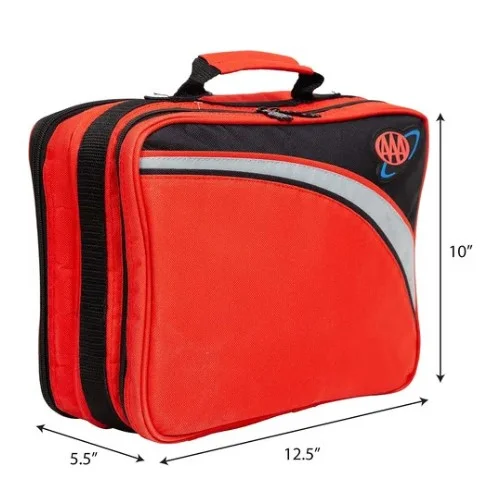

AAA has built its reputation on roadside reliability for over a century, and this kit reflects that. It’s not the biggest kit on the list, but it covers the scenarios most drivers actually run into: a dead battery, a low tire, a minor cut, and needing light after dark.
What Makes It Stand Out
The 10-foot, 8-gauge booster cables are thick enough to reliably jump most vehicles, well above the thin cables found in bargain kits. A built-in 250-PSI air compressor with gauge can inflate a standard tire from flat in about 8 minutes. The 9-LED aluminum flashlight, 11.5-inch reflective triangle, and a 45-piece first aid section round out a dual-compartment padded carry bag that keeps everything organized.
Pros
- Trusted brand: components meet AAA’s engineering standards
- Air compressor included: no need to find a gas station with air
- Quality jumper cables: 8-gauge with vinyl-coated clamps
- Reflective triangle included for roadside visibility
- 45-piece first aid section, not just adhesive strips
Cons
- Air compressor takes about 8 minutes per tire — slow if you have multiple flats
- First aid supplies cover minor injuries only, not trauma-level wounds
- No tow strap or jump starter power bank — you still need another vehicle or a separate jump pack if the battery is fully dead
- Fabric carry bag, not a rigid case, so it can compress under heavy trunk cargo
Who Should Buy It
Commuters, families, and anyone who wants one solid kit that handles the three most common roadside failures — dead battery, low tire, and darkness — without paying for a fleet-grade kit they don’t need.
2. AAA Severe Weather Emergency Kit — Best for Winter Driving
Price: $54.99 member / $74.99 non-member (AAA.com) | Pieces: 66 | Weight: Not listed by manufacturer | Best For: Cold-climate and snow-belt drivers


This kit swaps general-purpose tools for cold-specific gear, which matters more than people expect — a dead battery is far more likely below freezing, and being stranded in the cold is genuinely dangerous.
What Makes It Stand Out
A folding aluminum shovel handles digging out a stuck tire, and a 3-piece fleece set (cap, gloves, scarf) plus hand warmers and a fire starter give you real cold-weather protection, not just a thin foil blanket. An LED strobe light adds a signaling option beyond the standard flashlight, and the same 45-piece first aid kit found in AAA’s other kits is included.
Pros
- Purpose-built cold-weather gear: shovel, fleece set, hand warmers, fire starter
- LED strobe adds a distinct signaling option for low-visibility conditions
- Same 45-piece first aid section as AAA’s higher-tier kits
- Compact enough to store alongside a summer kit and swap seasonally
Cons
- No jumper cables included — this kit assumes you already have a separate set or a jump starter
- No air compressor or tire gauge
- Not useful outside cold-weather months; you’ll want a second kit or add-on items for summer
Who Should Buy It
Anyone who regularly drives in snow, ice, or sub-freezing temperatures, especially as a supplement to a kit that already covers jumper cables and tools.
3. NOCO Boost GB40 — Best Jump Starter Add-On
Price: ~$100 (varies by retailer; MSRP $124.95) | Pieces: N/A (standalone device) | Weight: 2.45 lbs | Best For: Anyone whose kit only has basic jumper cables, or solo drivers without a second car


Most kit-included jumper cables assume another running vehicle is nearby. The GB40 removes that dependency entirely — you can jump-start your own car by yourself, at night, in an empty parking lot.
What Makes It Stand Out
This 1000-amp lithium jump starter can start gas engines up to 6.0L and diesel engines up to 3.0L, delivering up to 20 starts per charge. NOCO’s UltraSafe technology adds spark-proof, reverse-polarity-protected clamps, so there’s no risk of a wrong connection causing a spark near the battery. It also works as a USB power bank and includes a 100-lumen flashlight with SOS and strobe modes, and it’s IP65 rated against dust and light rain.
Pros
- No second vehicle required to get a jump
- Spark-proof, reverse-polarity protection makes it safe for inexperienced users
- Compact and light at 2.45 lbs — fits in a glovebox
- Doubles as a phone charger and flashlight
Cons
- Standalone device — no first aid, tools, or other kit contents
- Costs more than basic jumper cables alone
- Needs periodic recharging (roughly every 3–6 months) to stay ready, unlike passive jumper cables
Who Should Buy It
Anyone pairing it with a basic kit that only has cables, solo or night drivers, EV owners (whose 12V accessory battery can still die), and anyone who wants to avoid relying on a stranger’s car for a jump.
4. AAA Approved Roadside Traveler Kit — Best for Road Trips & Families
Price: Varies by retailer (typically mid-tier, under the Excursion kit’s price) | Pieces: 103 | Weight: 3.54 lbs | Best For: Longer trips and multi-passenger vehicles


With more total pieces than the Excursion kit, this one leans toward covering more people over a longer stretch of road rather than adding heavier-duty tools.
What Makes It Stand Out
Contents include a window-mount reflective triangle, booster cables, a bungee cord, duct tape, a poncho, gloves, a screwdriver, and an LED flashlight with batteries, on top of first aid items covering band-aids, bandages, gauze, adhesive tape, antiseptic towelettes, and sting relief. The compact 12 x 3 x 8-inch bag keeps it from eating into trunk space on a packed family trip.
Pros
- Larger overall piece count skews toward more first aid coverage for multiple passengers
- Window-mount triangle is easier to deploy than a floor-standing one
- Compact footprint (3.54 lbs) fits easily in a packed trunk
- Comes with an AAA accident-report form and safety guide
Cons
- No air compressor or tire gauge
- Some first aid items carry a limited shelf life and will need periodic replacement
- No tow strap or heavy-duty recovery gear for anything beyond a minor breakdown
Who Should Buy It
Families heading out on road trips, or anyone who wants a first-aid-forward kit sized for more than one person, without paying fleet-kit prices.
5. Roadside Rescue Solutions 110-Piece Kit with HD Tow Strap — Best Heavy-Duty & Fleet Pick
Price: Not consistently listed across retailers at time of writing — check current listing | Pieces: 110 | Weight: Not listed by manufacturer | Best For: Trucks, RVs, and company fleet vehicles


This is the kit to reach for when a breakdown might mean more than a jump start — including situations where the vehicle needs to be physically pulled or recovered.
What Makes It Stand Out
It combines a 64-piece first aid kit with heavy-duty jumper cables, a heavy-duty tow strap, an 11-in-1 multi-tool, a magnesium fire starter, an emergency blanket, and a roadside warning sign, all packed into a rugged poly-canvas duffel bag with room left over for personal additions.
Pros
- Heavy-duty tow strap included — most personal kits skip this entirely
- Largest first aid section of the five picks at 64 pieces
- Multi-tool and fire starter add genuine utility beyond a standard roadside kit
- Duffel bag has spare room for fleet-specific additions (radios, extra flares, etc.)
Cons
- Bulkier than the other kits — better suited to a truck bed or SUV cargo area than a sedan trunk
- No air compressor or tire inflator included
- Exact current pricing and weight aren’t consistently published, so confirm details on the specific retailer page before bulk-ordering for a fleet
Who Should Buy It
Fleet managers, RV owners, rural and off-highway drivers, and anyone who needs recovery capability (not just a jump start) built into their kit.
Also read: Best Portable Jump Starters with Air Compressors: Buying Guide
FAQs About Car Emergency Kits
Is a car emergency kit legally required?
In most US states, no. However, some countries and specific jurisdictions (like certain European countries) require warning triangles, reflective vests, and first aid kits. In the US, commercial vehicles are subject to DOT regulations that mandate emergency equipment. Even where not required, a kit is strongly recommended by AAA, the NHTSA, and every major auto insurer.
Can I build my own car emergency kit instead of buying one?
Absolutely — and many experienced drivers prefer to. Building your own allows you to select higher-quality components (like 4-gauge jumper cables and a name-brand flashlight) while skipping items you already own. However, pre-built kits save time, ensure you do not forget critical items, and often cost less than buying components individually. For beginners, a quality pre-built kit is the better choice.
Where should I store my car emergency kit?
The trunk is standard, but consider these alternatives:
- Under a front seat: For compact kits; keeps supplies accessible if the trunk is damaged or jammed
- Rear cargo area: Secure with Velcro or cargo net to prevent projectile hazard in a crash
- Spare tire well: Uses otherwise wasted space, but requires unpacking the trunk to access
Never store the kit in an exterior compartment or unsecured where it can become a projectile during sudden braking or collision.
How long do the food and water in survival kits last?
Most survival food bars and water pouches have a 5-year shelf life. Check the expiration dates printed on each component during your annual kit inspection. Replace expired items promptly — a 10-year-old food bar may technically be safe, but its nutritional value and taste degrade significantly.
What is the difference between the car emergency kits and bug out bags?
A car emergency kit addresses roadside mechanical failures and short-term stranding (hours). A bug out bag addresses evacuation and long-term survival (days). Car kits include jumper cables and air compressors; bug out bags include food for 72+ hours, water filtration, and shelter. For comprehensive preparedness, keep a car emergency kit in your vehicle AND a bug out bag at home.
Should I get a kit with an air compressor or just use gas station air?
Gas station air is free or cheap, but unreliable. Machines break, hoses leak, and stations in rural areas may be miles apart. A 12V air compressor in your kit provides self-sufficiency — you can inflate a tire in your driveway, a dark parking lot, or the shoulder of a remote highway. For the $10–$20 premium over kits without compressors, it is worth it.
Conclusion (Best Car Emergency Kits)
The right car emergency kit isn’t the one with the biggest piece count on the box — it’s the one with thick enough jumper cables, real first aid supplies, and gear that matches how and where you actually drive. A commuter running short local errands needs far less than a family heading out on a winter road trip or a fleet vehicle logging highway miles every day. Match the kit to your driving conditions, spend a fair amount for the category ($30–$70 for most personal vehicles, $150+ for heavy-duty use), and check it every few months so it’s actually ready when you need it. Whether you buy a ready-made kit, build your own, or land somewhere in between, the goal is the same: turn an inevitable roadside surprise into a five-minute delay instead of a genuine emergency.
About This Guide: Best Kit Blog independently researches emergency preparedness gear by comparing manufacturer specifications and cross-checking owner reviews across multiple retailers — not through paid placements. Some links in this article are affiliate links, meaning we may earn a commission if you make a purchase, at no extra cost to you. That never determines which products are recommended or how they’re ranked.
Have a question this guide didn’t answer? Let us know and we’ll help you figure out the right bug out bag for your situation.