

Jeff Bezos Anxiety Advice to Deal with Stress and Anxiety
Jeff Bezos Anxiety Advice: When people feel stressed, they often delay the task causing that stress. That delay can make the problem feel bigger. Jeff Bezos’ view is simple: anxiety often grows when we avoid action, and it starts to shrink when we take the first step. That idea has caught attention because it is practical, memorable, and easy to apply in work and daily life.
Jeff Bezos’ core advice is that stress often increases when we avoid problems we can influence. He says the pressure begins to ease once we take the first real step, however small. For many people, action creates clarity, momentum, and a sense of control, which can reduce overwhelm and make solutions easier to see.
Jeff Bezos is the founder and executive chair of Amazon, and his comments on stress are often framed through leadership, decision-making, and problem-solving. As of March 2026, Forbes places him among the richest people in the world, which keeps his personal habits and leadership philosophy under constant public attention.
Yet the real value of this topic is not celebrity. It is usefulness. Many of us face unpaid bills, delayed conversations, unfinished projects, exam pressure, work deadlines, or family decisions. In those moments, stress can feel abstract and heavy. Bezos’ point is that action turns vague pressure into a concrete process.
This article explains what Bezos meant, why the idea resonates, where it helps, where it does not fully apply, and how we can use it wisely in our own lives.
What Jeff Bezos Actually Said About Anxiety and Stress
The quote that sparked interest came from remarks Bezos made during a 2017 visit to the Museum of Flight in Seattle. The modern discussion grew again after a 2026 article revisited the comment. His basic point was that when he feels stressed, it is often because he is not yet doing anything about the issue. Once he starts, the stress begins to fade.
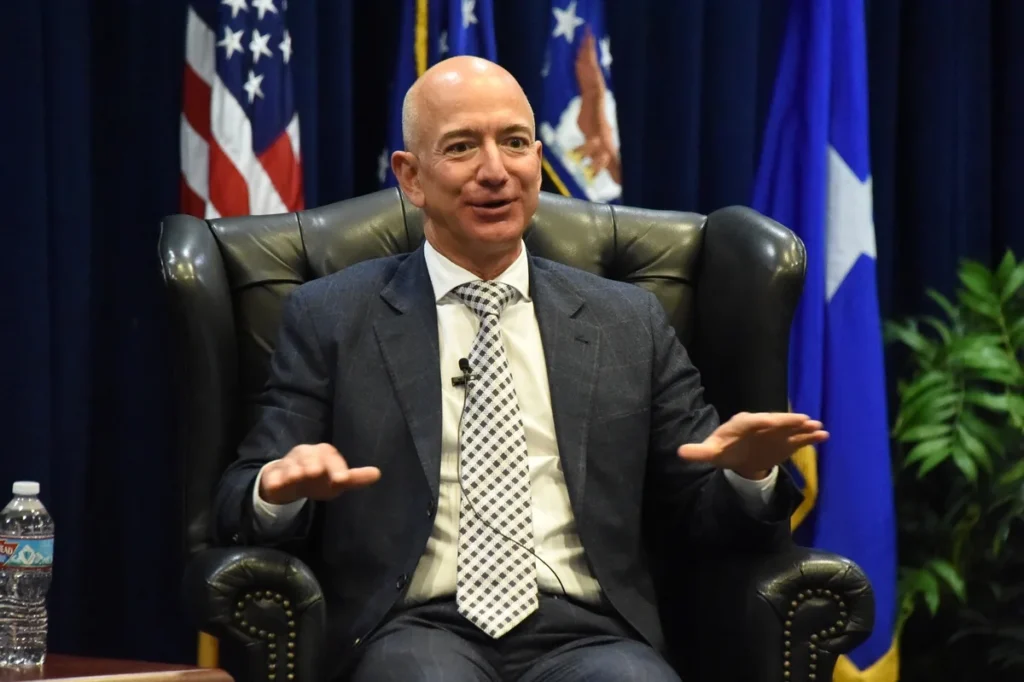
That statement is powerful because it connects emotion with behavior. Instead of treating stress as a random feeling, Bezos treats it like feedback. In his view, stress can signal that a problem needs movement. That does not mean every form of anxiety is caused by laziness. It means avoidable stress often grows when we stay stuck.
He also added another important idea: problem-solving with other people can transform stress into something energizing. Bezos described how working with inventors to solve a difficult issue can make the process feel exciting rather than draining. That part matters because action is not always solo action. Sometimes the first step is asking for help.
In practical terms, his message has three layers:
- Notice the stress.
- Ask what problem is being avoided.
- Take the first concrete step.
That sequence is simple, but it can be very effective. It replaces helplessness with movement.
Jeff Bezos Anxiety Advice and the Link Between Procrastination and Stress
Procrastination feels comfortable in the moment because it delays discomfort. We postpone the email, the payment, the application, the phone call, or the decision. For a short time, that delay gives relief. But the relief is temporary. The unfinished task remains active in the mind, and mental pressure grows.
This is where Jeff Bezos anxiety advice connects with daily life. When he says stress drops after the first step, he is describing a shift from passive worry to active engagement. Before action, the brain keeps imagining the task. After action, the task becomes structured. A structure is easier to handle than a cloud of fear.
For Pakistani professionals, students, freelancers, and business owners, this pattern is familiar. A visa renewal gets delayed. A tax issue remains untouched. A client proposal sits unfinished. A university form is not submitted. The stress is rarely only about the task itself. It is also about uncertainty, guilt, and the growing fear of consequences.
Here is how procrastination increases stress over time:
| Stage | What happens | Emotional effect |
|---|---|---|
| Delay | We avoid the task | Temporary relief |
| Build-up | Deadline gets closer | Rising tension |
| Rumination | We keep thinking about it | Mental fatigue |
| Consequences | Options narrow | Panic or regret |
| Forced action | We act under pressure | Poorer decisions |
The table shows why avoidance is costly. The problem is not only time lost. It is emotional energy lost. That is why early action is often the cheapest action.
Bezos’ phrase about “the first step” is useful because it lowers the barrier. He does not say solve everything today. He says begin.
Why Jeff Bezos Anxiety Advice Works for So Many People
The reason this advice spreads so widely is that it fits human psychology. Many stressful situations feel bigger before we touch them. Once we open the file, review the numbers, send the message, or start the outline, uncertainty reduces. We may not solve the whole issue, but we replace imagination with information.
Action works because it produces four immediate benefits.
First, it creates clarity. We often overestimate how hard a task will be before we start it. The first five minutes reveal what the actual problem is.
Second, it creates control. Stress gets worse when we feel powerless. Even a small action can restore a sense of agency.
Third, it creates momentum. Starting is harder than continuing. Once we begin, the next step usually feels easier.
Fourth, it creates feedback. We learn what is missing, what is urgent, and what can wait.
This idea also matches Amazon’s broader culture around decision-making and ownership. Amazon’s official leadership principles include “Ownership,” “Bias for Action,” “Invent and Simplify,” and “Dive Deep.” Those ideas reflect the same pattern: face the issue, move quickly when needed, and solve real problems rather than circling around them.
That said, wisdom lies in applying the principle correctly. Action reduces many forms of avoidable stress, but not all forms of anxiety come from delay. Some come from loss, trauma, health conditions, burnout, or financial hardship. So the value of Bezos’ advice is strongest when the problem is actionable.
Jeff Bezos Anxiety Advice in Work, Business, and Leadership
Work stress is often a mix of volume, ambiguity, and delay. A leader may know a hard conversation is needed but keep postponing it. A business owner may see falling sales but avoid reviewing the numbers. An employee may fear a difficult presentation and keep “preparing” without actually building the slides.
In each of these cases, action is not just productivity. It is emotional relief. Once the person names the issue and starts solving it, stress becomes directed energy.
This is why Bezos’ view also appeals to entrepreneurs. Amazon began as a small startup, and Bezos has long been associated with decisive experimentation, long-term thinking, and structured risk-taking. Official Amazon materials still identify him as executive chair, which reinforces his continued influence on leadership culture.
For leaders, Jeff Bezos anxiety advice matters in three specific ways:
1. It encourages problem ownership
Leaders cannot remove every problem. But they can stop passive drift. When a leader says, “Let’s define the issue and take the first step,” the team feels movement.
2. It reduces emotional contagion
Stress spreads quickly in teams. Delay does too. A calm first step can lower fear across the group.
3. It turns pressure into collaboration
Bezos also emphasized solving problems with others. That is important. Teams often become less anxious when the challenge is shared and framed as a puzzle rather than a threat.
In business, the lesson is clear: not every problem can be solved immediately, but nearly every serious problem can be approached immediately. That difference matters.
Where Jeff Bezos Anxiety Advice Is Helpful and Where It Has Limits
This is the most important part of the discussion. Advice becomes useful only when we know its boundaries.
Bezos’ statement is strongest in situations where stress is tied to unfinished action. Examples include delayed paperwork, ignored messages, postponed planning, unresolved work conflicts, or decisions that keep getting pushed back. In these cases, avoidance often feeds anxiety.
But not all anxiety works this way. Some people experience persistent anxiety that continues even when they are taking action. Others live under conditions where the stressor is real and external, such as illness, debt, unsafe work, family crisis, or long-term uncertainty. In those cases, telling someone to “just start” may sound too simplistic.
So the balanced view is this:
- Bezos offers a strong tool, not a universal explanation.
- Action can reduce avoidable stress.
- Action alone may not solve deeper emotional or structural problems.
Here is a simple comparison:
| Situation | Does action help quickly? | Notes |
|---|---|---|
| Delayed email or application | Yes | First step often removes mental resistance |
| Unclear project at work | Yes | Writing the next step reduces ambiguity |
| Hard conversation | Often | Planning and scheduling helps |
| Chronic burnout | Partly | Rest, boundaries, and support may be needed |
| Clinical or persistent anxiety | Not always | Professional care may be important |
| Financial crisis | Partly | Action helps, but resources also matter |
This balanced view makes the advice more credible. It respects real life. It also prevents us from turning a practical idea into a rigid rule.
How to Apply Jeff Bezos Anxiety Advice Step by Step
The best way to use this principle is not to wait for motivation. Instead, we turn it into a repeatable process.
Step 1: Name the exact source of stress
Do not say, “I am stressed.” Say, “I am stressed because I have not called the bank,” or “because I have not started the client proposal.”
Specific language reduces emotional fog. It turns a feeling into a target.
Step 2: Separate the problem from the story
We often add dramatic stories to simple tasks. A delayed message becomes “This will ruin everything.” A missed deadline becomes “I always fail.” Remove the story. Focus on the next useful move.
Step 3: Define the smallest first step
This is the heart of Bezos’ point. Make the first step so small that resistance has no excuse.
Examples:
- Open the document.
- Write the subject line.
- List required documents.
- Book the meeting.
- Send one clarifying message.
- Review the account balance.
Step 4: Give the first step a time box
A fifteen-minute start is often better than waiting for a perfect three-hour block. Time limits lower fear and create entry.
Step 5: Bring in another person if needed
If the issue is emotionally heavy, get support. Bezos specifically highlighted collaborative problem-solving as energizing. A friend, colleague, partner, or mentor can reduce isolation.
Step 6: Convert motion into a short plan
After the first step, define the next two or three actions. Once a task becomes a sequence, it becomes easier to manage.
Step 7: Review what changed
Notice how you feel after starting. In many cases, the emotional load drops before the task is fully completed. That is evidence the method is working.
Jeff Bezos Anxiety Advice Compared With Other CEO Stress Strategies
Bezos is not the only public figure to talk about stress. Other business leaders often recommend different tools, such as meditation, emotional control, communication, flexibility, and family time. Those approaches do not necessarily conflict with Bezos’ view. They often address different layers of stress.
The key difference is that Bezos emphasizes action against avoidance. Other leaders often emphasize balance, reflection, or emotional regulation. Both categories matter.
Here is a useful comparison:
| Approach | Main idea | Best for |
|---|---|---|
| Bezos approach | Start solving the problem | Avoidance-driven stress |
| Meditation | Calm the mind | High mental noise and reactivity |
| Exercise | Release tension physically | Build resilience and routine |
| Emotional control | Pause before reacting | Leadership pressure and conflict |
| Open dialogue | Discuss issues early | Team stress and workplace culture |
| Protected family time | Preserve personal stability | Burnout and imbalance |
The strongest takeaway is not that one method defeats all others. It is that the most effective stress strategy depends on the source of the stress.
If your stress comes from avoiding action, Bezos’ method may help fast.
If your stress comes from overwork, emotional depletion, or long-term instability, you may need rest, boundaries, conversation, or professional guidance as well.
Also read: The 10 Happiest Countries in the World
Real-World Examples of Jeff Bezos Anxiety Advice in Daily Life
Theory becomes valuable when it meets ordinary life. Below are examples where the principle works well.
Example 1: The student avoiding exam preparation
A student feels overwhelmed because exams are close. Instead of studying, they scroll social media and feel guilty. The first step is not “study everything.” It is opening the syllabus and listing the top three weak areas. That small action turns panic into a plan.
Example 2: The freelancer delaying a client response
A freelancer fears that a client will reject a revised price. They delay replying for two days. Stress rises. The first step is writing a short draft message and saving it. Once the message exists, the emotional barrier drops.
Example 3: The family delaying financial review
A family knows expenses are rising, but no one wants to review the budget. Tension builds every week. The first step is downloading the last two bank statements. That action creates visibility, and visibility creates better decisions.
Example 4: The small business owner avoiding a hard conversation
A business owner sees poor performance in one part of the team. They avoid the conversation to keep peace. Meanwhile, stress spreads. The first step is scheduling a meeting and writing three factual points. Structure makes honesty easier.
Example 5: The visa or documentation issue
A person fears a renewal process because it seems complicated. They keep waiting. Stress rises because deadlines do not stop. The first step is checking the official requirements and making a checklist. The issue becomes manageable.
In every example, the same pattern appears: the first step is not dramatic. It is concrete.
Best Practices for Using Jeff Bezos Anxiety Advice Without Burning Out
The danger with productivity advice is misuse. Some people hear “take action” and turn it into nonstop pressure. That misses the point. The goal is not to become harsh with ourselves. The goal is to reduce avoidable suffering through movement.
Here are practical best practices:
- Start with the smallest meaningful action.
- Focus on one stress source at a time.
- Use written checklists, not mental juggling.
- Ask for help early when the issue is complex.
- Distinguish urgent tasks from emotionally avoided tasks.
- Do not confuse frantic activity with useful action.
- Rest when exhaustion is the real problem.
A useful caution is this: action should create clarity, not chaos. If you respond to stress by doing ten random things, you may feel even worse. The first step should be simple, relevant, and connected to the real issue.
Another best practice is to combine action with reflection. Ask:
- What exactly am I avoiding?
- What am I afraid will happen?
- Who can help me think clearly?
- What is the smallest useful move?
These questions turn the advice into a disciplined habit rather than a motivational slogan.
Also read: 10 Lazy Ways To Make Money Online While You Sleep
Jeff Bezos Anxiety Advice and the Deeper Leadership Lesson
At a deeper level, Bezos’ view is not only about stress. It is about the relationship between responsibility and peace of mind.
People often assume peace comes after all problems disappear. Real life rarely works that way. Problems keep coming. The better model is that peace grows when we know how to engage with problems effectively.
That is a leadership lesson as much as a personal one. Strong leaders do not need perfect certainty before acting. They define the issue, make a move, gather feedback, and keep adjusting. Amazon’s official leadership principles continue to reflect this culture through ownership, curiosity, judgment, simplification, and action.
For ordinary people, this lesson is deeply relevant. We do not need billionaire resources to use it. We only need honesty about what we are postponing and enough courage to begin.
The emotional shift matters. When we avoid a problem, the problem controls our attention. When we take a first step, we begin to reclaim it.
That is why this idea feels so durable. It respects an old truth: many burdens become lighter once they move from the mind into the world of action.
Frequently Asked Questions About Jeff Bezos Anxiety Advice
What is Jeff Bezos’ main idea about anxiety?
His main idea is that stress often grows when we avoid acting on a problem we can influence. He says the stress starts to fade once we take the first real step.
Did Jeff Bezos literally say laziness is the root of anxiety?
That wording became popular through later reporting. The fuller idea is that avoidance and inaction often feed stress. The deeper message is about procrastination, not a blanket judgment on every anxious person.
Is Jeff Bezos still running Amazon?
Jeff Bezos is not Amazon’s CEO. Amazon’s investor relations materials list him as executive chair.
Does this advice work for everyone?
No. It works best when stress is tied to delayed action, unclear tasks, or avoided decisions. It may be less effective on its own for chronic anxiety, burnout, trauma, or serious life instability.
What is the first step I should take when I feel overwhelmed?
Name the exact issue, then choose one action that takes less than 15 minutes. Small starts are often the fastest way to reduce resistance.
Is asking for help part of the method?
Yes. Bezos also talked about solving problems with others and finding allies. Shared problem-solving can turn stress into progress.
Final Thoughts: The Most Useful Part of Jeff Bezos Anxiety Advice
The most valuable part of Jeff Bezos anxiety advice is not the celebrity quote. It is the practical principle inside it. Many forms of stress become heavier when we leave them untouched. They become more manageable when we engage them directly.
That does not mean we must solve everything at once. It means we should respect the power of the first step.
For students, workers, freelancers, parents, and business owners, this lesson is highly usable. When a task feels heavy, we can ask one simple question: What action am I avoiding right now? The answer often reveals the path forward.
And once that first step is taken, the mind usually follows.